
Mutual Fund
A mutual fund pools your money with other investors and a SEBI-registered fund house invests it in shares, bonds or both. Start with a monthly SIP in a low-cost index or flexi cap fund and give it at least five years. At an assumed 12% a year, Rs 10,000 a month for 20 years grows to about Rs 99.9 lakh, and only Rs 24 lakh of that is your own money.
Most mistakes happen before the first instalment. People chase last year's top fund, buy a low NAV thinking it's cheap, or put five-year money in small caps.
Below you'll find our SIP calculator, a plain guide to mutual fund NAV, the types of mutual funds, and what AMFI data says about people who stop their SIPs.
Key Highlights
- NAV timing: most schemes must publish NAV on the AMC and AMFI websites by 11 pm each business day (SEBI investor FAQs, September 2024).
- Which NAV you get: for purchases, the NAV of the day your money reaches the fund within the cut-off time (AMFI on NAV).
- Fund categories: SEBI fixes what each category must hold. A large cap fund keeps at least 80% in large companies; a flexi cap fund keeps at least 65% in equity of any size (SEBI Master Circular, 27 June 2024; flexi cap circular, 6 November 2020).
- ELSS: at least 80% in equity, a three-year lock-in, and a deduction under section 80C (now section 123) in the old regime only (AMFI on categories).
- Step-up matters: raising a Rs 10,000 SIP by 10% a year roughly doubles the 20-year corpus, to about Rs 1.99 crore at an assumed 12%.
Start with these guides
SIP Calculator for Rs 10,000 Per Month: How Much Wealth Can You Build?
Year-by-year value of a Rs 10,000 SIP at an assumed 12%.
SIP Stoppage Ratio July 2026: What the AMFI Data Really Means
Why redeeming a SIP costs far more than pausing it.
SIP vs RD 2026: Returns, Risk, Tax and Which to Choose
Market-linked SIP against a fixed-return RD.
30-Year Home Loan + SIP: Does Long Tenure Pay Off?
Invest the EMI gap or prepay? The break-even return.
Calculators and rates
Maturity value of a monthly SIP, with the formula.
See what raising your SIP every year adds up to.
Work backwards from a target to the SIP you need.
EMI, FD, RD, PPF and more money tools in one place.
How much does a Rs 10,000 monthly SIP grow to?
| Period | You invest | Value at 12% a year |
|---|---|---|
| 5 years | Rs 6,00,000 | Rs 8,24,864 |
| 10 years | Rs 12,00,000 | Rs 23,23,391 |
| 15 years | Rs 18,00,000 | Rs 50,45,760 |
| 20 years | Rs 24,00,000 | Rs 99,91,479 |
| 25 years | Rs 30,00,000 | Rs 1,89,76,351 |
Frequently asked questions
What is a mutual fund, in simple words?
A pool of money from many investors that a SEBI-registered fund house invests in shares, bonds or both. You own units, not the shares themselves. Each unit's value is the NAV, which moves with the market every business day.
How much will a Rs 10,000 SIP grow to in 20 years?
About Rs 99.9 lakh at an assumed 12% a year, from Rs 24 lakh of your own money. At 10% it would be much less, so treat 12% as a planning number, not a promise. Raise the SIP by 10% every year and the same 20 years gets you about Rs 1.99 crore on Rs 68.7 lakh invested.
Is a fund with a low NAV cheaper to buy?
No. This is the most common NAV mistake I see. Rs 10,000 buys 1,000 units at a NAV of Rs 10 or 100 units at Rs 100. If both portfolios rise 10%, both holdings become Rs 11,000. What matters is the return, cost and portfolio, not the unit price.
When is the NAV declared, and which NAV will I get?
Most schemes must publish NAV on the AMC and AMFI websites by 11 pm on each business day, as per SEBI's investor FAQs (September 2024). Fund of funds and schemes with large overseas holdings get until 10 am the next business day. For purchases, you get the NAV of the day the money reaches the fund within the cut-off time, not the day you click buy.
SIP or lumpsum: which is better?
If you already have a large sum and a 10-year horizon, lumpsum has historically had more time in the market. Most of us don't, though. We earn monthly, so a SIP fits how money actually arrives, and it spares you from guessing the market's peak. For a windfall I'd split it into a SIP over 6 to 12 months into equity.
What is the best SIP plan for 5 years?
For five years, I wouldn't put the whole amount in a pure equity fund. A bad year near the end can wipe out a large part of the gain. A hybrid fund, or a mix of an index fund and a short-term debt fund, is safer for that horizon. The best fund list you see online changes every year; your horizon doesn't.
Is a Nifty 50 index fund enough for a beginner?
For most beginners, yes. It holds India's 50 largest listed companies, costs little in a direct plan and saves you from choosing a fund manager. Add a flexi cap fund later if you want some mid and small cap exposure.
What is a flexi cap fund?
An equity fund that must keep at least 65% in shares and can invest across large, mid and small companies in any proportion. SEBI created the category on 6 November 2020. The manager decides the mix, so two flexi cap funds can behave very differently.
Does ELSS still save tax?
Only in the old regime. ELSS has a three-year lock-in and counts towards the Rs 1.5 lakh deduction under section 80C, now section 123 of the Income-tax Act, 2025. In the new regime there's no deduction, so judge it as an ordinary equity fund.
What happens if I miss a SIP instalment?
The fund house skips that month. It doesn't fine you, but your bank may charge for a failed auto-debit, and after repeated failures most fund houses cancel the SIP. If money is tight, cut the amount rather than stopping.
Expert take: Ashutosh Joshi
"Pick the fund once, then stop looking at it every week. I plan my own equity SIPs at 10 to 12% and check that the goal still works at 10%."
"The real wealth comes from raising the SIP with your salary. A fixed Rs 10,000 for 20 years is good. The same SIP stepped up 10% a year is about twice as good."
"And when the market falls, keep going. That's when your instalment buys the most units."
All Mutual Fund articles
Every guide on mutual funds, SIPs and NAV, newest first. Weighing a ULIP against a SIP? Read our ULIP guides first.
Gold ETF vs Gold Fund of Funds: Demat, SIP, Costs and Tax Holding Period
If you already chose paper gold inside the SEBI mutual fund route, the next choice…
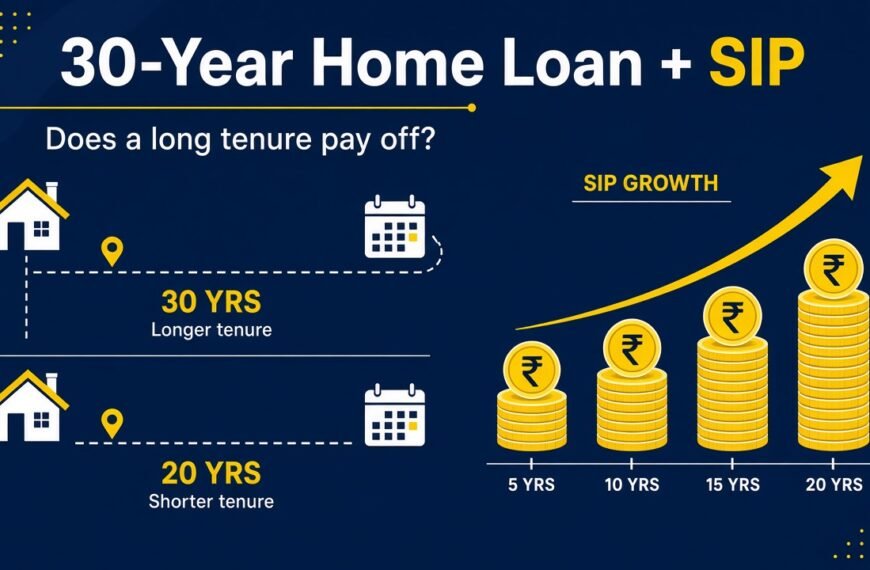
30-Year Home Loan + SIP: Does a Long Tenure Really Pay Off?
Short answer: a 30-year home loan pays off only if you actually invest the EMI…

For Every 100 SIPs Started In July, 82 Ended. Your Calculator Doesn’t Know That
AMFI’s July 2026 data shows 50.29 lakh SIPs ended against 61.44 lakh started. Every SIP…

SIP Calculator for ₹10,000 Per Month: How Much Wealth Can You Build?
If you can invest ₹10,000 every month, a Systematic Investment Plan (SIP) can help you…

भारतीय बाजार में निवेश के लिए 10 बेहतरीन म्युचुअल फंड्स – Top 10 Mutual Funds in India
म्युचुअल फंड(Mutual fund) निवेश का एक अत्यंत सहूलियत प्रदान करने वाला साधन हैं जो आपको…

Things You Need To Know About Mutual Fund NAV
MF NAV stands for mutual fund Net asset value, which represents the unit price of…

SIP vs RD: Which is a Better Investment Option in 2026?
Regarding investment avenues, Bank fixed deposits, and mutual funds are the best options for retail…

Mutual fund – The Money Game!
The mutual fund market is the most lavish and trendy investment market attracting investors. If…